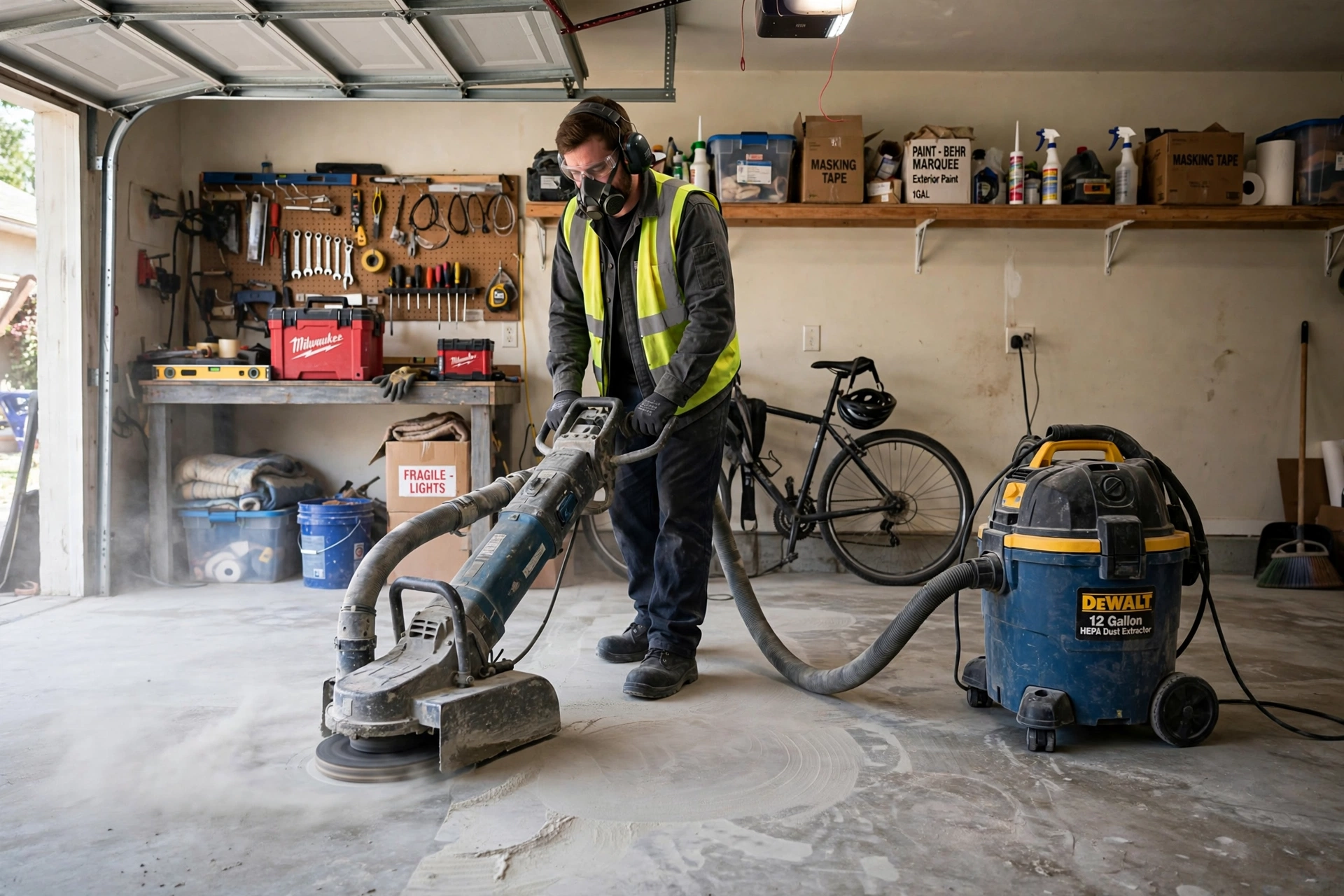

If you’re pricing an epoxy floor in Thunder Bay, the honest short answer is: most professionally installed epoxy garage floors run about $7 to $12 per square foot, all-in — surface preparation, coating system, and topcoat included. A typical double garage lands somewhere between $3,100 and $5,300. This guide breaks down where those numbers come from, what pushes a quote up or down, and why Thunder Bay garages in particular are hard on bare concrete.

Epoxy Flooring Costs at a Glance
| Project | Typical Size | Typical Installed Cost |
|---|---|---|
| Single garage | ~280 sq ft | $2,000–$3,400 |
| Double garage | ~440 sq ft | $3,100–$5,300 |
| Triple garage or workshop | ~650 sq ft | $4,600–$7,800 |
| Basement floor (solid or flake) | ~600 sq ft | $4,200–$7,200 |
These are planning ranges based on published Canadian installer pricing, not quotes. Your slab’s condition is the single biggest variable — more on that below.
Cost by Finish: Solid, Flake, or Metallic
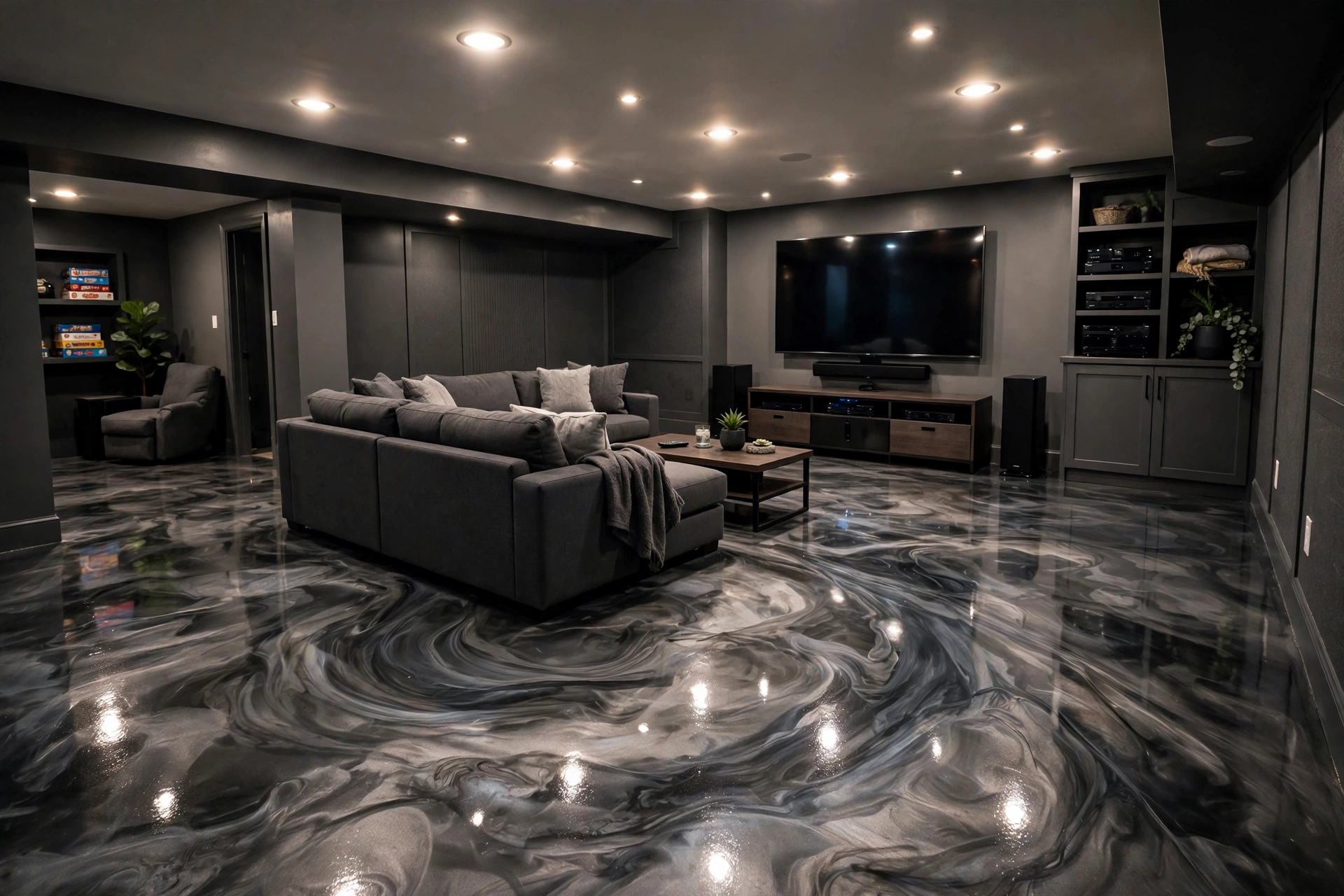
Solid-colour epoxy is the entry point, usually at the lower end of the per-square-foot range. It’s the workhorse choice for workshops and utility spaces. Decorative flake systems — the speckled finish most people picture — sit in the middle of the range and are the most popular choice for garage floor epoxy because the flake hides dirt, salt tracks, and minor slab imperfections while adding slip resistance. Our decorative flake systems page shows the colour blends. Metallic epoxy is the premium finish — a marbled, three-dimensional look that typically runs $11 to $16 per square foot, which is why it’s chosen more often for basements, rec rooms, and showrooms than for everyday garages. You can see examples on the metallic epoxy coatings page.
Why Thunder Bay Garages Are Hard on Concrete
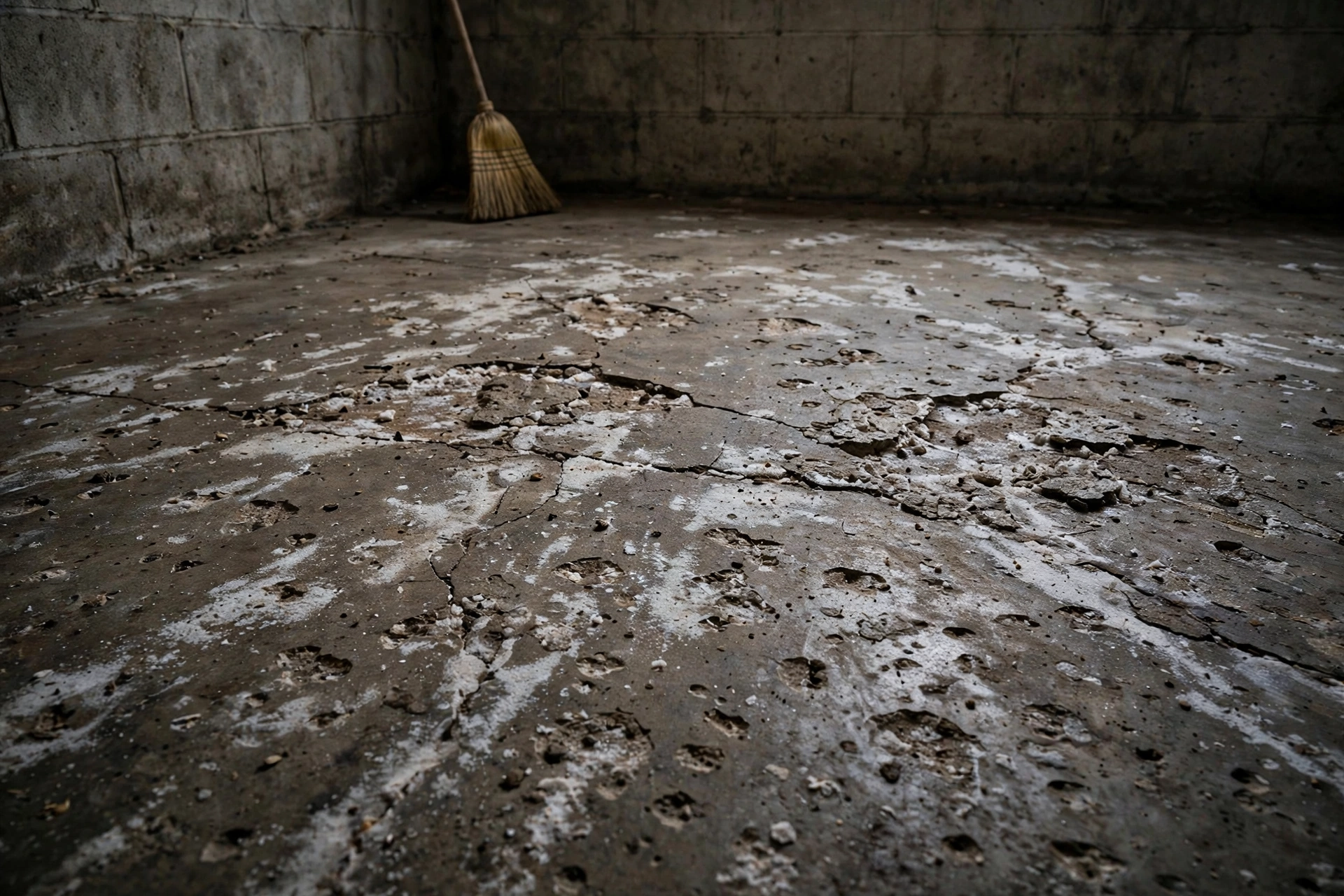
Every winter, your vehicle carries road salt and brine into the garage and drops it on the slab. Salt accelerates pitting and surface breakdown, and Thunder Bay’s freeze-thaw cycles work meltwater into every small crack, widening it a little more each spring. It’s why so many older garages in Westfort and Current River have that rough, spalling surface — and why a coating here isn’t just cosmetic. A properly prepared epoxy system seals the slab against salt and moisture, and sweeping out spring slush becomes a two-minute job instead of an afternoon of scraping.
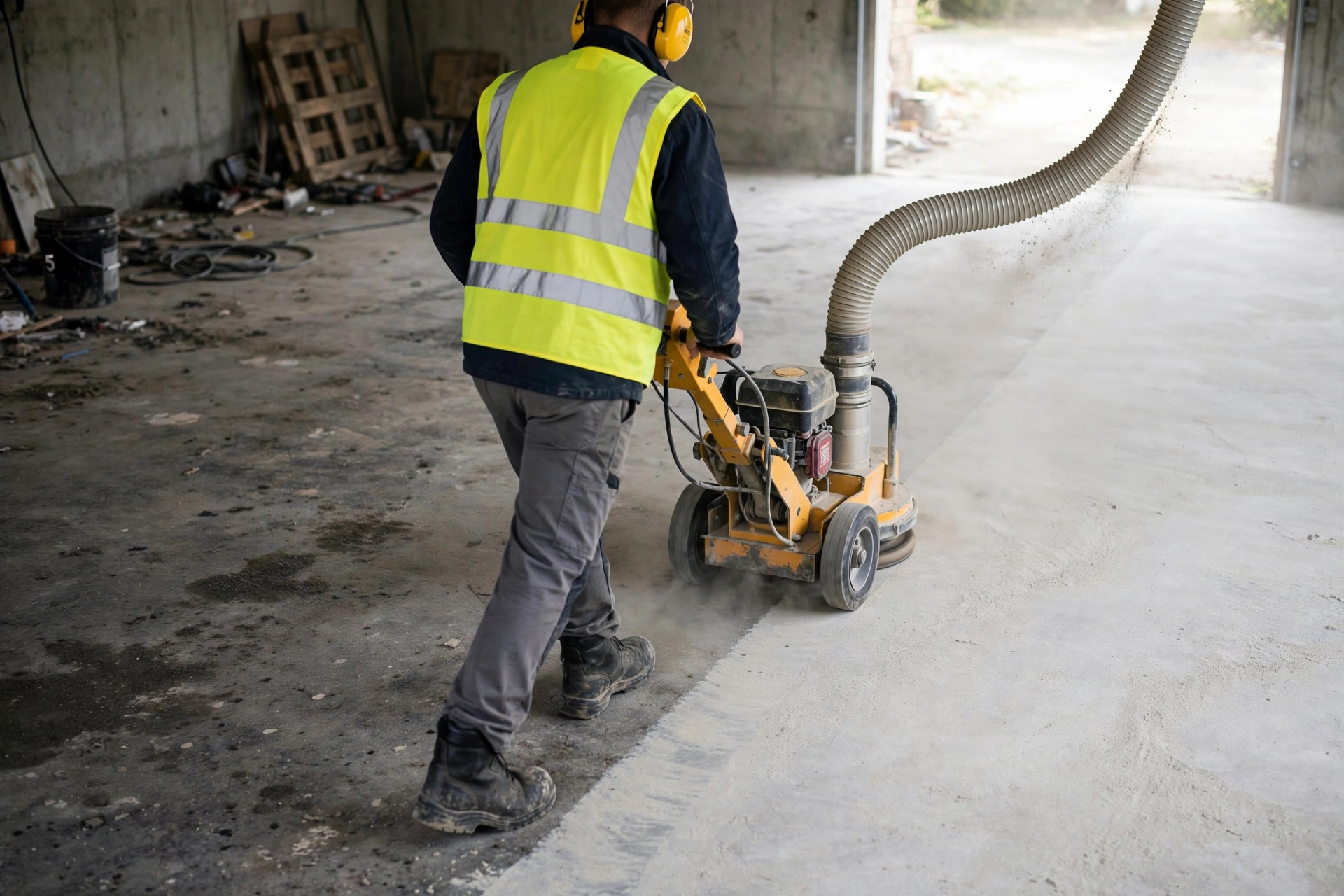
The flip side for pricing: a salt-damaged slab needs more preparation — grinding down to sound concrete, filling pits and cracks — before any coating goes on. Newer homes in areas like Parkdale and Innova Park usually have cleaner slabs and sit at the low end of the range; a forty-year-old slab that’s seen forty winters of salt will sit higher. That’s slab condition, not upselling.
What Moves a Quote Up or Down
- Concrete condition. Cracks, pitting, oil stains, and previous coatings that need removing all add preparation time — the biggest cost variable on any job.
- Moisture in the slab. If the concrete holds moisture, a moisture-mitigating primer is needed so the coating doesn’t peel. Skipping it is how cheap jobs fail.
- Finish and topcoat. Flake density, metallic pigments, and a UV-stable polyaspartic topcoat each add cost — and each adds durability or appearance in return.
- Size and layout. Larger floors cost less per square foot; small floors still carry the same mobilization and edge work, so their per-foot rate runs higher.
- Steps, stem walls, and extras. Coating the vertical edges, steps, or an adjoining laundry or mudroom adds area and detail work.
What About DIY Kits?
Hardware-store epoxy kits run about $150 to $250 and cover a single garage — tempting, until you compare what’s actually included. Kits are thin, single-coat products applied over acid-etched concrete; professional systems are built up in layers over diamond-ground concrete, which is what makes them bond for the long term. In a salt-and-freeze-thaw climate, kit floors commonly peel within a few winters, and removing a failed kit later costs more than the preparation it skipped. If the floor is a low-stakes workshop corner, a kit is a reasonable weekend project. For the main garage, the math usually favours doing it once, properly.
Frequently Asked Questions
How long does an epoxy garage floor take to install?
Most residential garages take two to three days including preparation and cure time before vehicles can return — your installer will confirm the schedule for the specific system used.
Can epoxy be installed in winter in Thunder Bay?
It can, with the right products and a heated space, but most homeowners book in spring through fall when the slab is warm and dry. Booking ahead of the spring rush is the easiest way to get your preferred dates.
Does epoxy add value to a home?
A clean, finished garage is a genuine selling feature in Thunder Bay’s market — buyers read it as a maintained home. The bigger day-to-day return is a floor that shrugs off salt, oil, and slush and stays easy to clean.
Get an Exact Price for Your Floor
Every range above narrows to a real number once someone measures your slab and sees its condition. Send us your garage size — or just a photo of the floor — and we’ll give you a firm quote with no obligation. Call 807-808-8701 or reach us through the contact page.