

Epoxy flooring is often discussed as though it is one product that works the same way everywhere. In practice, the right system depends on the concrete, the environment, and how the floor will actually be used.
As a hands-on epoxy flooring contractor in Thunder Bay, we install coatings in residential garages, basements, patios, workshops, and commercial spaces. While both residential and commercial floors can benefit from epoxy, polyaspartic coatings, decorative flake, and protective topcoats, their performance requirements are often very different.
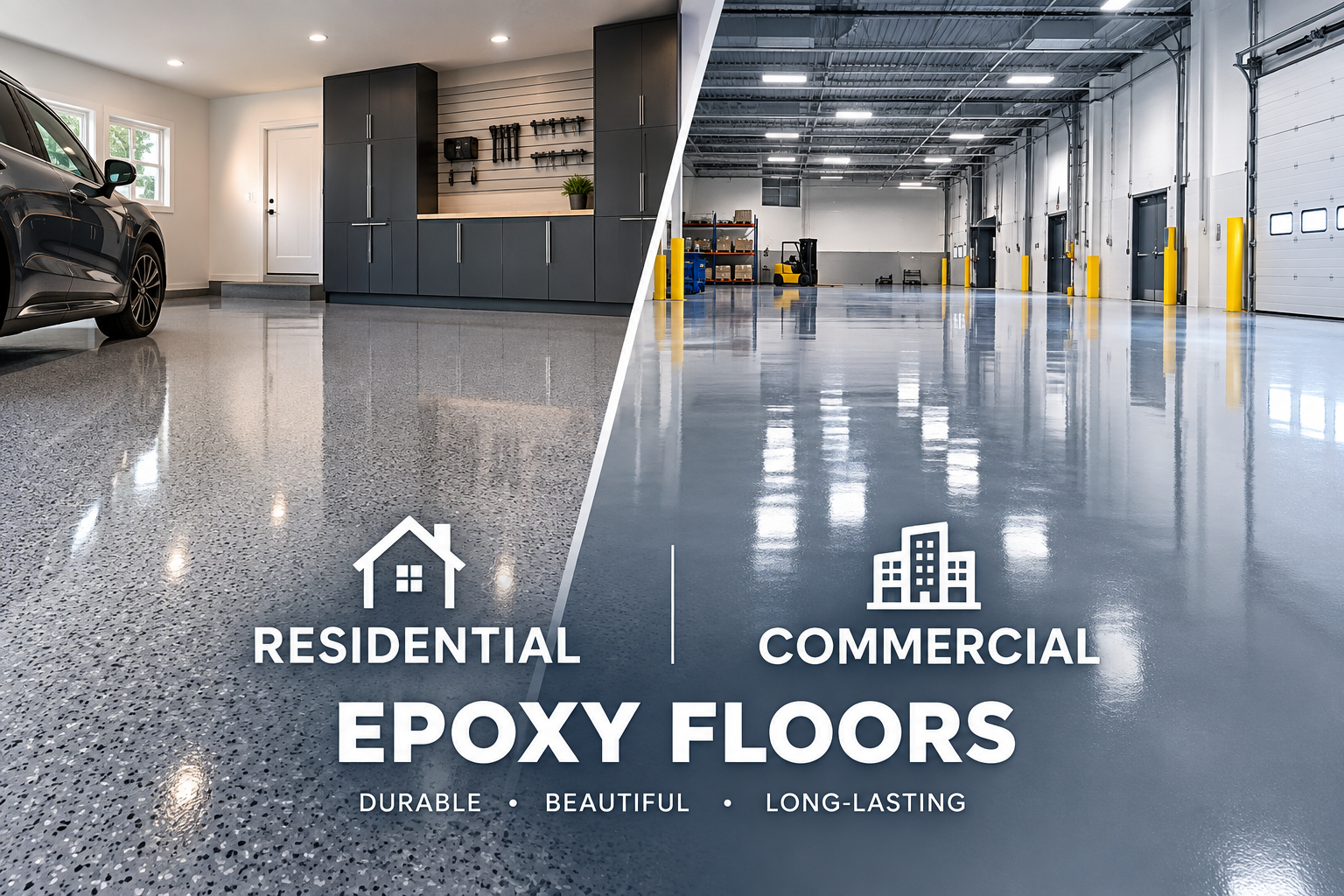
Residential Epoxy Floors: Durability Meets Appearance
Residential floor coatings are commonly installed in garages, basements, home workshops, and patios. Homeowners usually want a clean, finished appearance along with protection from vehicle traffic, oil, moisture, road salt, and everyday wear.
Decorative flake systems are especially popular for garage floors because they create a uniform appearance and help disguise minor imperfections in the concrete. For basements and finished spaces, the focus may be more on making an unfinished slab look cleaner and more usable.
A typical residential garage may only see a few vehicles, but in Thunder Bay it can still face demanding conditions. Winter moisture, road salt, freezing temperatures, and seasonal changes all affect concrete and coating performance.
A Residential Garage Example
On one two-car garage project, the slab had hairline cracks, small pits, oil staining, and worn areas near the entrance. We mechanically prepared the concrete, treated contaminated areas, repaired damage, and installed a multi-step epoxy system with decorative vinyl flake and a clear protective topcoat.
The visible finish mattered to the homeowner, but preparation was what made the project successful. The concrete needed to be clean, sound, and dry enough for the coating to bond properly.
Commercial Epoxy Floors: Built for Greater Demands
Commercial and industrial floors may face constant foot traffic, carts, vehicles, equipment, dropped tools, spills, aggressive cleaning products, oils, solvents, and repeated impact. These conditions can require more extensive repairs, heavier-duty materials, additional film thickness, and specialized topcoats.
A commercial workshop, for example, may need a system designed around equipment traffic, cleanability, chemical exposure, and slip resistance—not simply a glossy finish.
A Commercial Workshop Example
We prepared a heavily used workshop floor with years of tire traffic, stains, minor cracking, and surface wear. Mechanical grinding removed weak material and contaminants, repairs addressed damaged areas, and a heavy-duty epoxy-based system was installed for the expected traffic and maintenance needs.
The result was a cleaner, more uniform, easier-to-maintain floor. But the coating itself was only part of the solution; the preparation work was critical.
Key Differences to Consider
- Residential floors often prioritize appearance, easy cleaning, and normal vehicle or household use.
- Commercial floors generally require greater resistance to wear, impacts, chemicals, and frequent cleaning.
- Commercial spaces may need slip-resistant aggregate where water, oil, or contaminants are common.
- Business downtime matters. Cure times, temperature, humidity, and scheduling must be planned carefully.
- The correct thickness and number of layers should match the use of the floor, not a generic “more is better” approach.
Why Preparation Matters More Than Most People Expect
The biggest misconception is that epoxy can simply be rolled over concrete. Concrete must be assessed for cracks, surface weakness, old paint, contamination, and moisture.
A slab can look dry while moisture is still moving through it. Coating an unsuitable slab can lead to blistering, bubbling, or adhesion problems. Likewise, old paint or a previous coating is not automatically a reliable base for new epoxy.
DIY kits can have a place, but they are not necessarily comparable to a professionally prepared and installed flooring system. Product chemistry, preparation equipment, coating thickness, repair work, and curing conditions all matter.
Choosing the Right Concrete Coating in Thunder Bay
There is no single best epoxy floor for every property. A garage, basement, patio, workshop, warehouse, or industrial area may require different preparation and materials. Epoxy, polyaspartic coatings, decorative flake systems, and protective topcoats each have appropriate uses.
Our approach is to assess the concrete first, then recommend a system that fits the traffic, moisture conditions, exposure, appearance goals, and budget. We would rather install the right system than sell more material than the floor needs.
If you are considering residential or commercial epoxy flooring in Thunder Bay or the surrounding area, contact us to discuss your project and request a concrete assessment or quote.